Stock From Scraps: The Freezer Bag Method
Onion ends, fennel fronds and a roast chicken carcass can become the best stock you have ever cooked with. All it takes is a bag in the freezer and a quiet afternoon.
In a professional kitchen, very little gets thrown away. Onion tops, carrot peels, parsley stems and chicken bones all go into a tub by the stove, and by the end of the day that tub becomes stock. Home cooks can do the same thing with one small habit: a bag in the freezer that collects scraps until there is enough to make a pot.
Homemade stock is not a luxury project. It is cheap, it uses things you already paid for, and it makes soups, risottos, braises and even a simple pan sauce taste noticeably deeper than anything from a carton.
Set up the bag
Take a large zip-top freezer bag or a lidded container and label it clearly. Each time you prep vegetables or finish a roast, drop the useful trimmings in and return it to the freezer. When it is full, usually after a week or two of normal cooking, it is time to make stock.
Freezing does two things. It stops scraps from spoiling while you collect them, and it breaks down cell walls, which helps vegetables release flavor faster when they finally hit the pot.
What to save
Good candidates for the bag:
- Onion, leek and shallot ends and outer layers, including some papery skin for color
- Carrot tops, tails and peels, washed first
- Celery leaves and bases
- Fennel stalks and fronds
- Mushroom stems
- Parsley and cilantro stems, thyme stalks and the odd bay leaf
- Garlic ends and the small inner cloves you did not bother to peel
- Bones and trimmings from roast chicken, plus wing tips and necks
A roast chicken carcass alone, with a few vegetable scraps, makes an excellent light stock. If you want a richer result, save two or three carcasses before you cook.
What to leave out
Some scraps make stock bitter, murky or overpowering. Leave out the brassicas, such as broccoli, cauliflower, cabbage and Brussels sprouts, which turn sulfurous with long cooking. Avoid potato peels, which cloud the liquid, and beet trimmings, which turn everything pink. Skip anything moldy or slimy; stock concentrates flavors, including bad ones. Strongly flavored herbs like rosemary and sage can dominate, so use them sparingly if at all.
Making the stock
Tip the frozen scraps straight into a large pot. There is no need to thaw them. Add cold water to cover by about two inches. Starting cold helps pull out flavor gradually and produces a clearer stock.
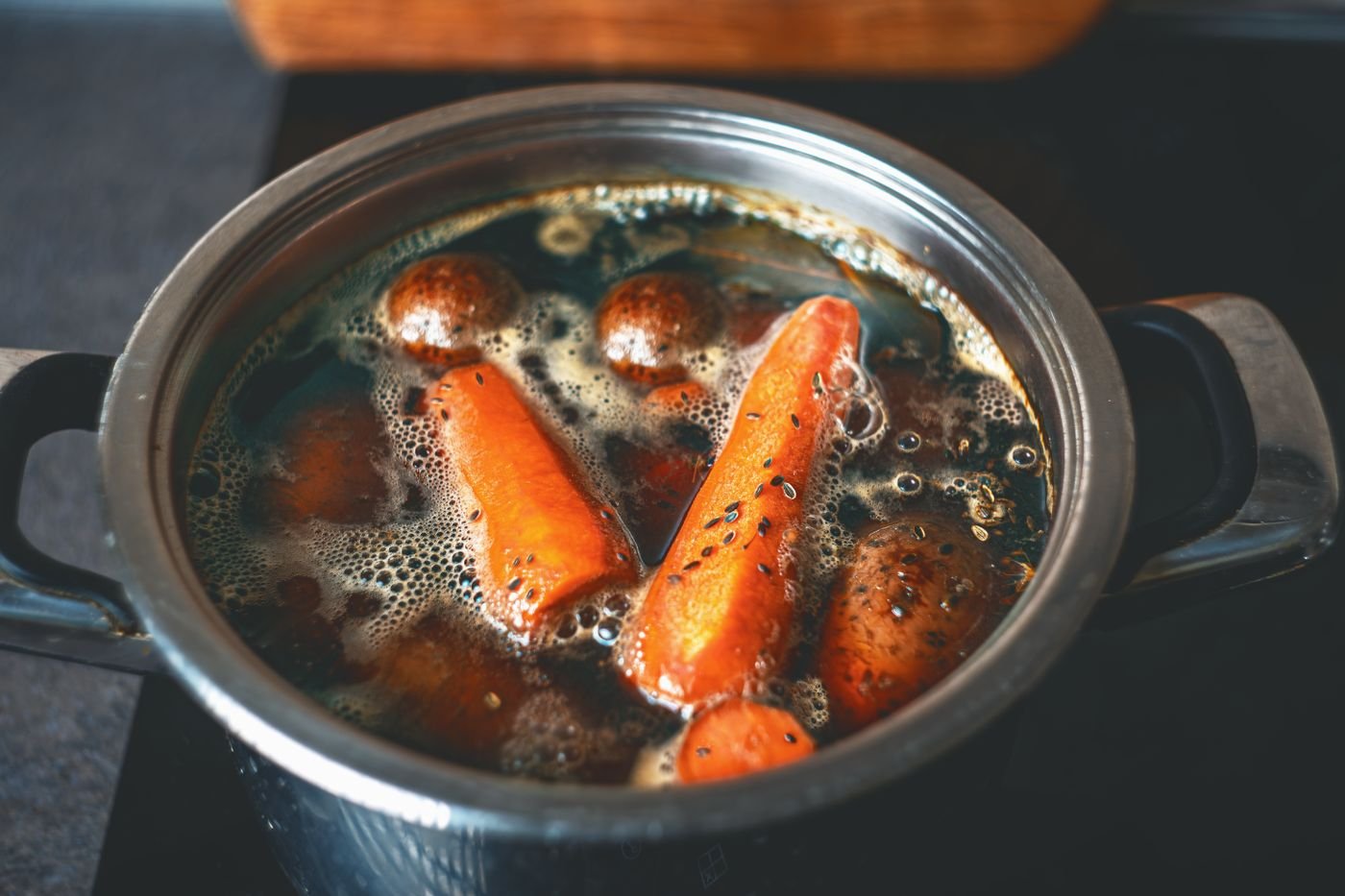
Bring the pot slowly up to a bare simmer over medium heat, then lower the heat so only a few small bubbles break the surface. A hard boil emulsifies fat into the liquid and makes stock cloudy and greasy. Skim off any gray foam that rises in the first half hour.
Add a few black peppercorns but no salt. Unsalted stock gives you control later, especially if you reduce it for a sauce.
Simmer vegetable stock for about 45 minutes to an hour; beyond that it can start to taste stewed. Chicken stock benefits from longer, around three to four hours, to draw out gelatin from the bones. That gelatin is what gives good stock body and makes it set to a soft jelly in the fridge.
Roasting for a darker stock
For a deeper, browner stock, spread the thawed scraps and bones on a sheet pan, toss with a little oil and roast at 425F until well browned, about 40 minutes. Scrape everything, including the browned bits on the pan, into the pot and continue as above. Roasted stock is excellent for gravies, onion soup and braised beef.
Straining and cooling
Pour the stock through a fine sieve into a large bowl, pressing lightly on the solids, then discard them. For an especially clear result, line the sieve with a damp cloth.
Cool stock quickly. Large pots of hot liquid stay in the temperature range where bacteria thrive for a long time. Divide it into smaller containers, or set the bowl in a sink of ice water and stir occasionally until it is lukewarm, then refrigerate.
Once chilled, the fat will rise and set on top. Lift it off and discard it, or save chicken fat for roasting potatoes.
Storing and using it
Stock keeps for about four days in the fridge and several months in the freezer. Freeze it in a mix of sizes: a few quart containers for soups, some one-cup portions for risotto and braises, and an ice cube tray for small amounts to loosen a pan sauce or reheat leftovers.
To save space, you can simmer strained stock down by half before freezing. Just remember to add water back when you use it, and label the container so you know it is concentrated.
A few ways to use it this week
Cook rice or grains in stock instead of water. Simmer a handful of pasta, some greens and a can of beans in stock for a fast soup. Deglaze a pan after searing chicken with a splash of stock and a knob of butter. Or simply warm a mug of it with a little salt, grated ginger and a squeeze of lemon. Good stock is one of the quietest improvements you can make to your cooking, and once the bag habit sticks, it costs you almost nothing.