Hosting a Relaxed Dinner Without Losing the Evening
The best dinner parties are rarely the most elaborate. Plan a menu that mostly cooks itself, set the table to share, and you will actually get to sit down with your guests.
I have been to a lot of dinner parties, and I keep a list of the ones I loved. Almost none of them were fancy. What they had in common was a host who was sitting at the table, laughing, instead of sprinting between the stove and the dining room. The food was good, sometimes very good, but it was designed so that the evening could happen around it.
That is the goal of relaxed hosting. You are not running a restaurant. You are inviting people into your home, and the most generous thing you can give them is your attention.
Choose a menu that cooks ahead
Before you pick dishes, decide how much you want to be doing once guests arrive. For most of us, the answer should be very little. Build the menu around recipes that are finished or nearly finished in advance.
- Braises, stews and slow-roasted meats, which often taste better the next day
- Grain and bean salads, which hold well at room temperature
- Roasted vegetables served warm or at room temperature
- A dessert you can make the day before, such as a crumble, a cake or a set custard
Limit yourself to one dish that needs last-minute attention, and make it something simple, like a green salad you dress at the table or a tray of vegetables that goes into the oven as people sit down.
Serve it family style
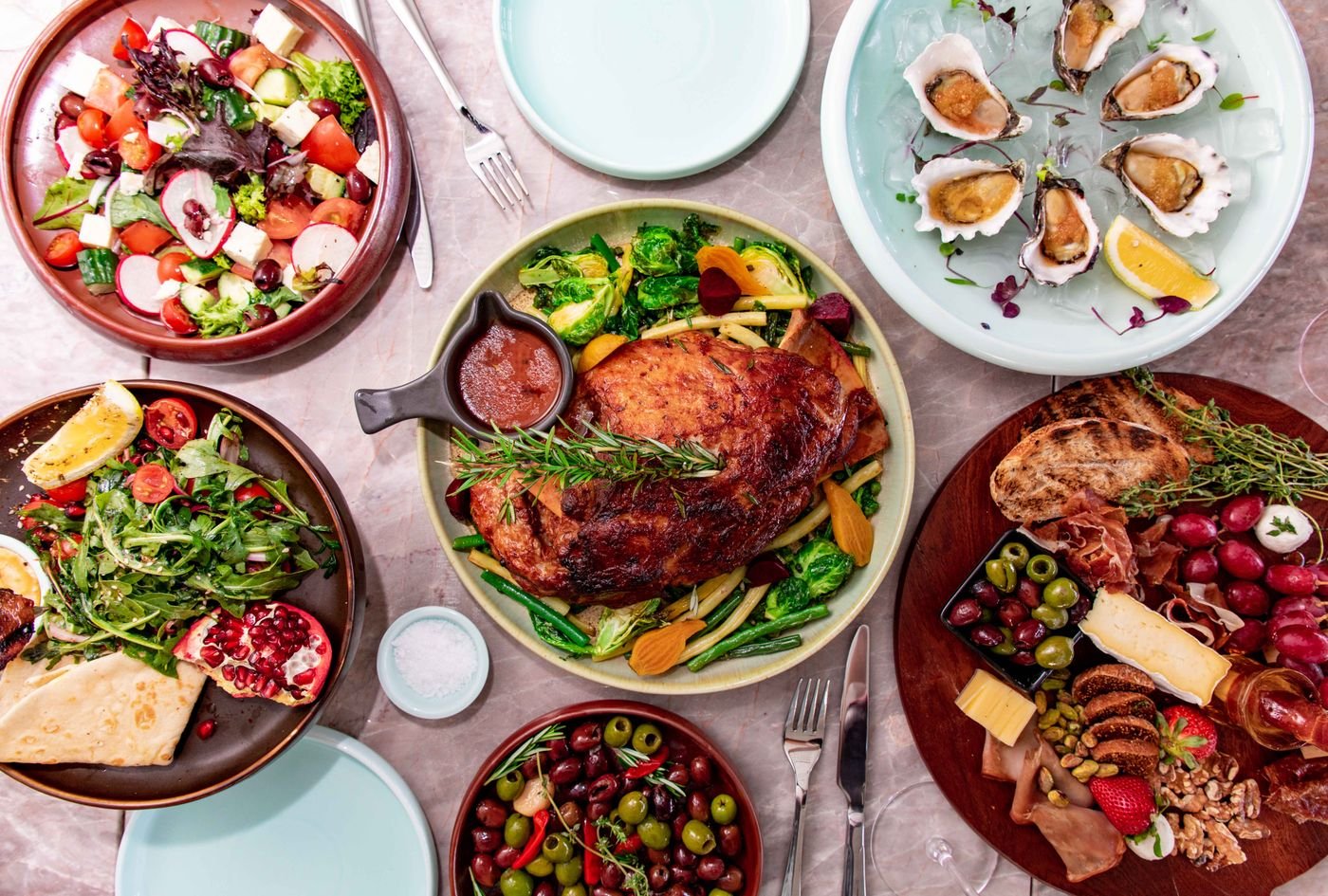
Plated courses look impressive, but they tie you to the kitchen. Instead, set platters and bowls down the middle of the table and let everyone help themselves. A roast chicken on a bed of vegetables, a big salad, a bowl of olives and a board of bread and cheese make a table look generous with no extra work.
Sharing food also changes the mood. Passing dishes gets people talking and makes it easy for guests with different appetites or dietary needs to take what suits them.
Plan backward from the doorbell
Write a simple timeline, working back from the moment guests arrive. It does not need to be elaborate. Something like this works:
Two days before, shop for everything except the most perishable items and make dessert if it keeps. The day before, cook the braise or the main dish, make dressings and sauces, wash and dry greens, and chill drinks. On the day, set the table in the morning, prepare any snacks, and aim to have the kitchen mostly clean an hour before people arrive.
That last hour is important. Use it to reheat, tidy, change your clothes and sit down for five minutes. Guests notice when the host is calm, and they relax with you.
Start with something to nibble
People rarely arrive at exactly the same time, and nobody wants to wait hungry. Put out a few easy things that need no cooking: good bread with olive oil and flaky salt, a bowl of olives, radishes with soft butter, or a plate of cheese and fruit. Offer one simple drink, including a non-alcoholic option that feels as considered as the rest, such as sparkling water with citrus and herbs.
This first half hour buys you time to finish anything in the kitchen without anyone feeling neglected.
Set the table, not a scene
A relaxed table is comfortable before it is beautiful. Make sure there are enough chairs, enough room for elbows, and a water glass for everyone. A cloth napkin and a candle or two go a long way. Keep flowers low so people can see each other across the table.
Put serving spoons in every dish before you sit down, and place a small plate or board nearby for bones, shells or olive pits. These little details save you from leaping up mid-conversation.
Say yes to help
When a guest asks what they can bring, give them a real answer. Bread from a good bakery, a bottle of wine, a salad or ice cream for dessert all take pressure off you, and most people are happier with a clear task than a polite no. When guests offer to help clear the table, let one or two of them stack plates while you put on coffee. Shared chores turn into some of the best conversations of the night.
Let the imperfections go
Something will go slightly wrong. The rice will be a little soft, or the roast will need ten more minutes. Nobody will remember. They will remember whether they felt welcome, whether the room was warm and whether there was enough to eat. If a dish fails outright, put out more bread and cheese, open another bottle, and tell the story. It will become part of the evening.
Keep dessert simple
By the end of the meal, people are full and happy. Dessert only needs to be sweet and a little special. A fruit crumble with cream, a chocolate cake made the day before, or bowls of ice cream with a warm sauce all feel like a treat. Serve it with coffee or tea, and resist the urge to start washing up. The dishes can wait. The conversation will not.