A Working Guide to Fresh Herbs: Tender, Woody and When to Add Each
Fresh herbs fall into two families that behave very differently in the pan. Learn which is which, and you will stop wasting bunches and start using them with confidence.
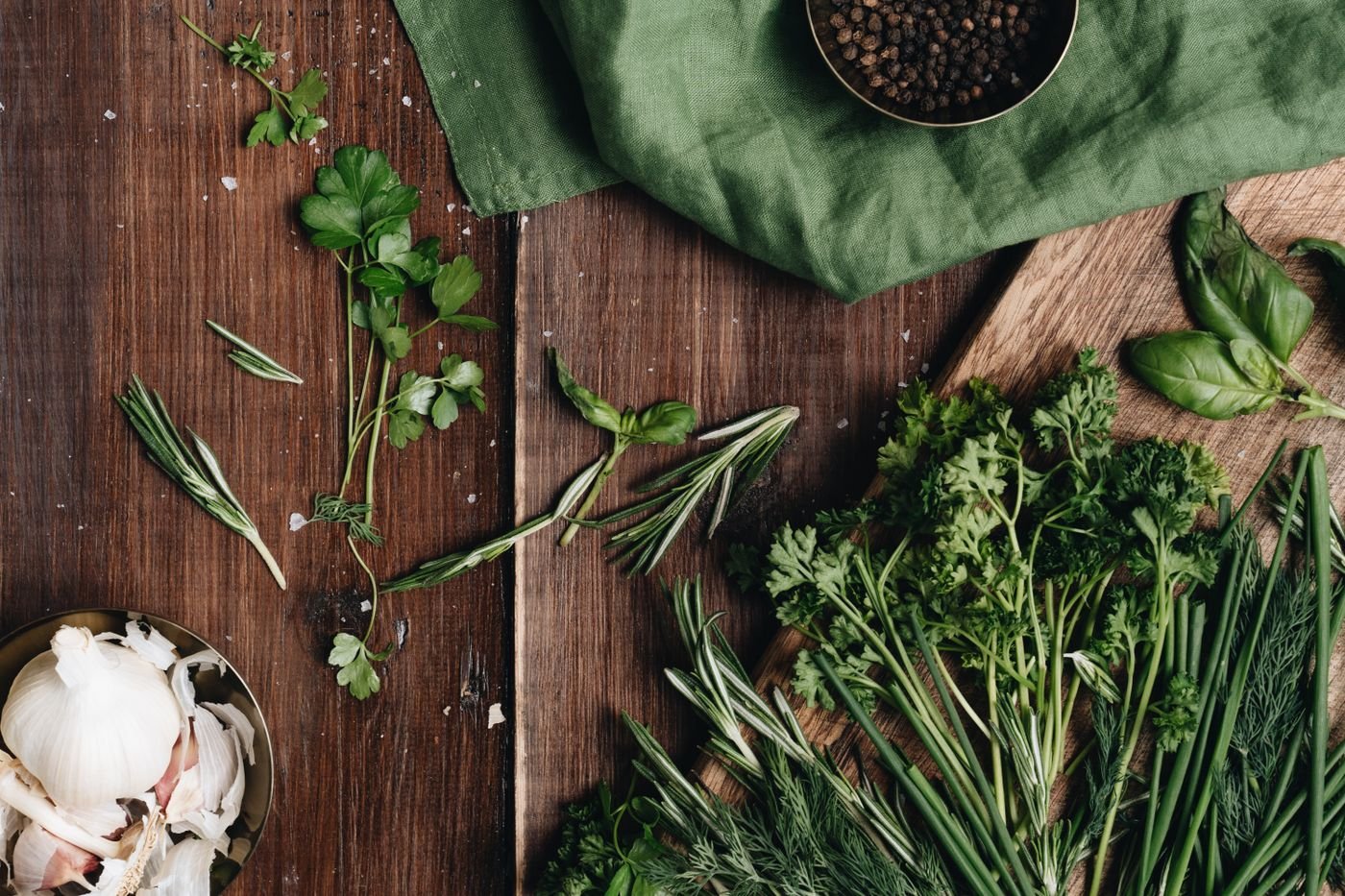
When I style a dish for a photo, the herbs are nearly always the last thing to go on, and I have learned that the same is true on the stove. A handful of torn basil or a scatter of chopped parsley can make a plate look and taste alive. But not every herb wants the same treatment, and a lot of the frustration people feel with fresh herbs, from limp bunches in the fridge to bitter, blackened leaves in a sauce, comes from treating them all the same way.
The simplest way to think about herbs is to split them into two groups: tender and woody.
Tender herbs
Tender herbs have soft stems and delicate leaves. The most common are:
- Basil
- Parsley
- Cilantro
- Dill
- Mint
- Chives
- Chervil and tarragon
These herbs carry bright, fresh flavors that fade quickly with heat. As a rule, add them at the end of cooking or use them raw. Stir chopped parsley into a stew just before serving, tear basil over pasta off the heat, or fold dill and chives into yogurt for a quick sauce.
Most tender herbs have stems worth eating. Cilantro stems are as flavorful as the leaves and can be chopped finely right along with them. Parsley stems are slightly tougher but perfect for blending into sauces or dropping into a pot of stock. Basil and mint stems are woody enough that you should just pick off the leaves.
Woody herbs
Woody herbs have firm stems and tougher, often needle-like or leathery leaves. These include:
- Rosemary
- Thyme
- Sage
- Oregano
- Bay leaves
- Marjoram, which sits somewhere in between
Their flavors come from oils that hold up to, and often improve with, long cooking. Add them early. Tuck thyme sprigs under a roasting chicken, simmer a bay leaf with beans, or let rosemary sizzle in the oil before you add potatoes. Most of the time you will want to remove the stems before serving, or strip the leaves first by running your fingers down the stem against the direction of growth.
Woody herbs can also be used raw, but sparingly, and chopped very finely. A little raw rosemary goes a long way.
Chopping without bruising
Tender herbs bruise easily. A dull knife crushes them and turns the cut edges dark and the flavor grassy. Make sure the herbs are completely dry before cutting, use your sharpest knife, and slice through them in as few passes as possible rather than chopping back and forth for a full minute. For basil and mint, you can stack the leaves, roll them, and cut thin ribbons, or simply tear them by hand just before serving.
Buying and storing
Look for bunches that are perky and evenly colored, without yellowing, dark wet spots or a sour smell. At the market, herbs are often cheaper and fresher than in the supermarket, especially in summer.
Storage depends on the family.
For parsley, cilantro, dill and mint, trim the stem ends, stand the bunch in a jar with an inch of water like a bouquet, cover loosely with a plastic bag, and refrigerate. Change the water every couple of days. Treated this way, they often last well over a week.
Basil is the exception. It dislikes the cold and turns black in the fridge. Keep it in a jar of water on the counter, out of direct sun, and use it within a few days.
For woody herbs and chives, wrap them loosely in a barely damp paper towel, slip them into a container or bag, and refrigerate. Rosemary and thyme can last two weeks this way.
Using up the whole bunch
The most common complaint I hear is buying a bunch of herbs for one recipe and throwing most of it away. A few ways around that:
Make a green sauce. Blend or finely chop any mix of tender herbs with garlic, olive oil, lemon juice or vinegar, and salt. It is excellent on eggs, grilled vegetables, fish and grain bowls, and keeps for several days in a jar with a thin layer of oil on top.
Freeze in oil. Chop woody herbs or sturdier tender ones like parsley, pack them into an ice cube tray, cover with olive oil and freeze. Drop a cube into a pan when you start a soup or sauce.
Dry woody herbs. Tie thyme, oregano or rosemary in small bundles and hang them somewhere dry and airy for a week or two. Tender herbs lose most of their character when dried, so I do not bother.
Add them to salads. Whole parsley leaves, mint and dill are wonderful tossed with lettuce, and they make an ordinary salad taste like something you planned.
A note on dried versus fresh
Dried herbs are not a failed version of fresh herbs; they are a different ingredient. Dried oregano and thyme are excellent in long-cooked sauces and rubs. If you are substituting dried for fresh, use about one third of the amount, and add it early so it has time to soften and bloom. For tender herbs like basil, cilantro and parsley, there is no good dried substitute. Use something fresh and green instead, even if it is not the same herb.